

12 Islamic Months Names in Order (Urdu, Arabic & English) with Meaning [2026 Guide]
Last Updated: April 2026
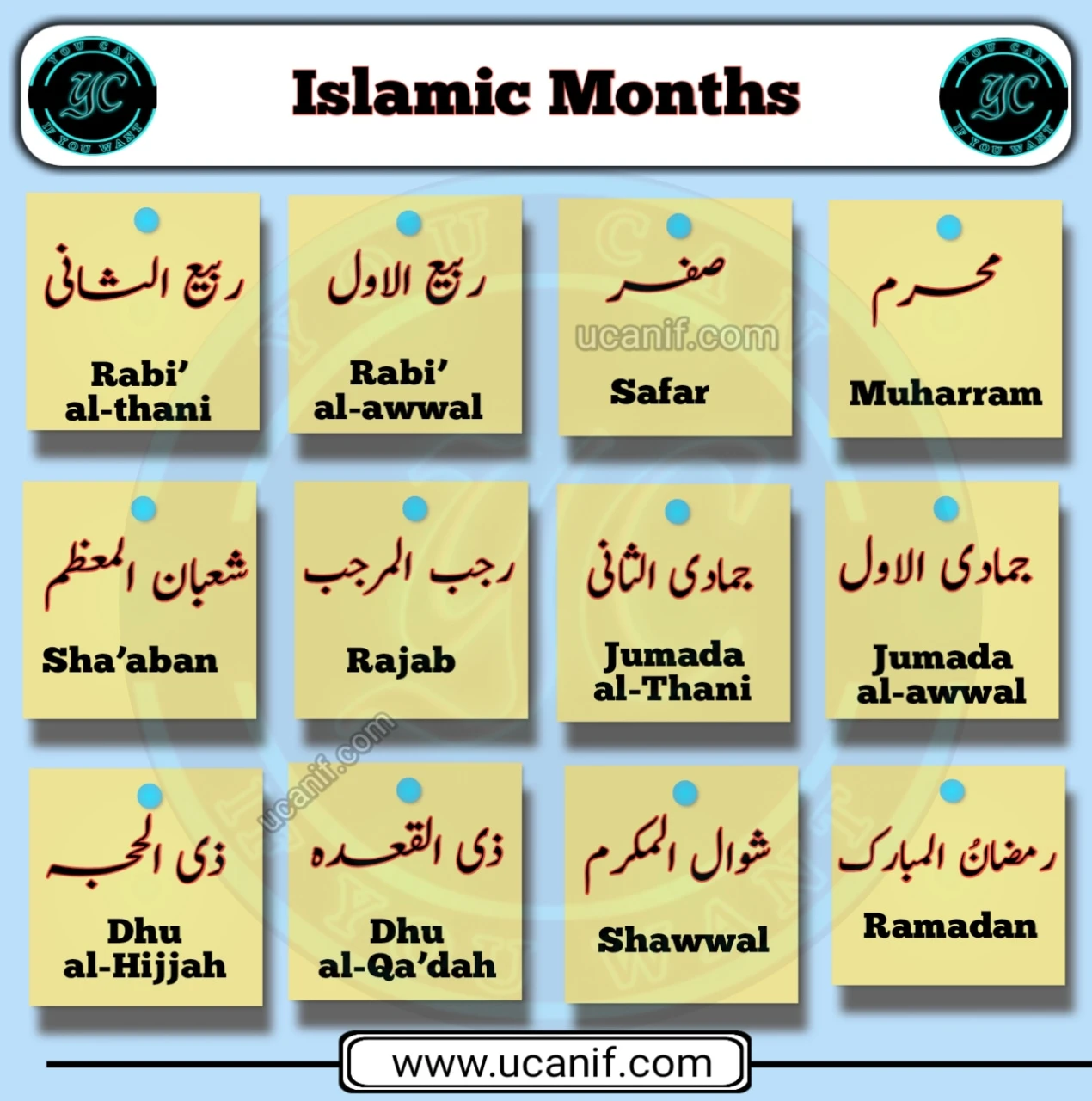
The Islamic Months Name are part of the traditional Hijri calendar, also called the Islamic lunar calendar. These 12 Hijri months hold deep historical and spiritual value. This guide covers all Islamic calendar months in Urdu, English, and Arabic—along with meanings.
What are the 12 Islamic months in order?
The 12 Islamic months are: Muharram, Safar, Rabi’ al-awwal, Rabi’ al-thani, Jumada al-awwal, Jumada al-thani, Rajab, Sha’aban, Ramadan, Shawwal, Dhu al-Qa‘dah, and Dhu al-Hijjah.
These months are part of the Islamic Hijri calendar, which is based on the lunar cycle and contains 354 or 355 days.
Importance of Islamic Months in Daily Life
The Islamic months guide major religious practices, including fasting, pilgrimage, charity, and Islamic celebrations such as Eid al-Fitr and Eid al-Adha. Understanding the Islamic Months Name with meaning and history helps students and learners gain a deeper connection with Islamic traditions.
This guide provides a complete explanation of the Islamic calendar months, along with their meanings, historical background, and religious significance, making it a reliable reference for readers worldwide.
12 Islamic Months Name in Order (English List)
Below is the complete Islamic months names list in order
- Muharram (1st Month)
- Safar (2nd Month)
- Rabi’ al-awwal (3rd Month)
- Rabi’ al-thani (4th Month)
- Jumada al-awwal (5th Month)
- Jumada al-thani (6th Month)
- Rajab (7th Month)
- Sha’aban (8th Month)
- Ramadan (9th Month)
- Shawwal (10th Month)
- Dhu al-Qa‘dah (11th Month)
- Dhu al-Hijjah (12th Month)
Islamic Months Names in Urdu (With English Translation)
Many people search for Islamic months names in Urdu for learning and educational purposes. Here is a quick list:
- Muharram – محرم
- Safar – صفر
- Rabi’ al-awwal – ربیع الاول
- Rabi’ al-thani – ربیع الثانی
- Jumada al-awwal – جمادی الاول
- Jumada al-thani – جمادی الثانی
- Rajab – رجب
- Sha’aban – شعبان
- Ramadan – رمضان
- Shawwal – شوال
- Dhu al-Qa‘dah – ذوالقعدۃ
- Dhu al-Hijjah – ذوالحجۃ
H2: Hijri Calendar vs Gregorian Calendar: Key Differences Explained
Understanding the Islamic (Hijri) calendar alongside the Gregorian calendar helps you follow Islamic months and events accurately. While both calendars have 12 months, they work very differently:
👉 Swipe left/right to view full table on mobile
| Feature | Hijri Calendar | Gregorian Calendar |
|---|---|---|
| Basis | Lunar (Moon cycles) | Solar (Sun cycles) |
| Months | 12 lunar months | 12 solar months |
| Days per Year | 354 or 355 days | 365 or 366 days |
| Year Shift | Moves ~11 days earlier each year | Fixed year length |
| Use | Religious events like Ramadan, Hajj | Civil and global events |
Why it matters:
- Islamic months shift every year in the Gregorian calendar, which is why Ramadan, Eid, and Hajj fall on different Gregorian dates each year.
- Learning both calendars gives you clarity when planning religious activities and understanding historical Islamic events.
💡 Pro Tip: Scroll down to see the complete 12 Islamic months table in Urdu, Arabic, and English with their meanings and significance.
Quick Challenge: Can you name all 12 Islamic months without looking? Scroll down and test yourself 👇
Interactive Quiz: Test Your Knowledge of Islamic Months
Question will appear here
Explore Islamic Months (Click to Learn Meaning & Significance)
This interactive guide helps you learn Islamic months easily.
Muharram is the first month of the Islamic calendar and one of the four sacred months. The day of Ashura is observed with fasting and remembrance.
Safar historically marked travel season. It has no specific rituals but encourages consistency in worship.
This month is associated with the birth of Prophet Muhammad ﷺ and is observed with remembrance and reflection.
A continuation of spiritual renewal, encouraging good deeds and voluntary worship.
Historically a dry season, reminding Muslims to remain patient and focused on faith.
Encourages strengthening relationships and maintaining regular prayers.
A sacred month linked with Isra and Mi’raj. Many Muslims increase prayers and fasting.
A preparation month for Ramadan, encouraging extra fasting and worship.
The holiest month, marked by fasting and the revelation of the Quran.
Celebrates Eid al-Fitr and includes six recommended fasts.
A sacred month used for peace and preparation for Hajj.
The month of Hajj and Eid al-Adha, full of spiritual importance.
Sacred Islamic Months Name
Four of the Islamic months are known as sacred (Ashhur al-Hurum). Warfare was historically prohibited in these months of Islam. These months also hold special religious merit.
- Muharram: A significant month marking the start of the Hijri year.
- Rajab: Known as “The Month of Allah.”
- Dhu al-Qi’dah: A peaceful month before Hajj.
- Dhu al-Hijjah: The month of Hajj and Eid al-Adha.
12 Islamic Months Names Table (Urdu, Arabic, Meaning & Significance)
This complete table provides all Islamic months names in English, Urdu, and Arabic along with their meanings and key significance. It is the most useful quick reference for students and learners.
Here is the complete list of 12 Islamic months with Urdu, Arabic, meanings, and significance
👉 Swipe left/right to view full table on mobile
| Month | Urdu | Arabic | Meaning | Key Significance |
|---|---|---|---|---|
| Muharram | محرم | ٱلْمُحَرَّم | Forbidden / Sacred | Islamic New Year, Day of Ashura |
| Safar | صفر | صَفَر | Empty / Void | Travel period historically |
| Rabi’ al-awwal | ربیع الاول | رَبِيع ٱلْأَوَّل | First Spring | Birth of Prophet Muhammad ﷺ |
| Rabi’ al-thani | ربیع الثانی | رَبِيع ٱلثَّانِي | Second Spring | Spiritual renewal |
| Jumada al-awwal | جمادی الاول | جُمَادَىٰ ٱلْأُولَىٰ | First Parched Land | Dry season in Arabia |
| Jumada al-thani | جمادی الثانی | جُمَادَىٰ ٱلثَّانِيَة | Second Parched Land | Consistency in worship |
| Rajab | رجب | رَجَب | Respect / Honour | Sacred month (Isra & Mi’raj) |
| Sha’aban | شعبان | شَعْبَان | Scattered | Preparation for Ramadan |
| Ramadan | رمضان | رَمَضَان | Burning Heat | Fasting & Quran revelation |
| Shawwal | شوال | شَوَّال | Raised | Eid al-Fitr |
| Dhu al-Qa‘dah | ذوالقعدۃ | ذُو ٱلْقَعْدَة | Truce | Sacred, pre-Hajj period |
| Dhu al-Hijjah | ذوالحجۃ | ذُو ٱلْحِجَّة | Pilgrimage | Hajj & Eid al-Adha |
| Feature | Hijri Calendar | Gregorian Calendar |
|---|---|---|
| Basis | Lunar (Moon cycles) | Solar (Sun cycles) |
| Months | 12 lunar months | 12 solar months |
| Days per Year | 354 or 355 days | 365 or 366 days |
| Year Shift | Moves ~11 days earlier each year | Fixed year length |
| Use | Religious events like Ramadan, Hajj | Civil and global events |
Historical Meaning of Arabic Months
The names of the Hijri months originate from the Arabic language and reflect the climatic conditions and social practices of pre-Islamic Arabia. For example, the word Ramadan comes from the Arabic root ramad, meaning intense heat, while the two Jumada months refer to dry or frozen land.
Although the Islamic calendar is purely lunar and seasons now change every year, the original names of the months have remained unchanged and preserved in Islam.
You can also learn days of the week in Arabic → 👉
Check our guide on 12 months name in English → 👉
Conclusion
The Islamic Months Name form the basis of the Hijri calendar, guiding all major Islamic rituals from Ramadan fasting to Hajj. Learning these arabic month name—especially in Urdu and English—helps students and adults better understand Islamic history, events, and traditions.
People Also Ask About Islamic Months
What is the first month in the Islamic calendar?
The first month of the Islamic calendar is Muharram. It is also one of the four sacred months in Islam and marks the beginning of the Hijri year.
Why does the Islamic calendar have 12 months?
The Islamic calendar has 12 months because it follows the lunar cycle. Each month begins with the sighting of the new moon, making the total year about 354 or 355 days.
Which Islamic month is Ramadan?
Ramadan is the 9th month of the Islamic calendar. It is the holiest month in Islam during which Muslims fast from dawn to sunset.
Which month is for Hajj in Islam?
Hajj is performed in the month of Dhu al-Hijjah, which is the 12th and final month of the Islamic calendar.
Why do Islamic months change every year?
Islamic months shift every year because the Hijri calendar is based on the moon and is about 10–11 days shorter than the Gregorian calendar.
FAQs on Islamic Months Name
Q1: What are the 12 Islamic Months Name in order?
All 12 months are: Muharram, Safar, Rabi’ al-awwal, Rabi’ al-thani, Jumada al-awwal, Jumada al-thani, Rajab, Sha’aban, Ramadan, Shawwal, Dhu al-Qa‘dah, and Dhu al-Hijjah.
Q2: Which are the four sacred (Haram) months in Islam?
The four sacred Islamic months are Muharram, Rajab, Dhu al-Qa‘dah, and Dhu al-Hijjah. These months are considered blessed and warfare was prohibited in them.
Q3: Which month is considered the most blessed in Islam?
Muharram and Ramadan are among the most blessed Islamic months due to their spiritual importance and special religious events.
Q4: What is the Islamic (Hijri) calendar?
The Islamic or Hijri calendar is a lunar calendar with 12 months and 354–355 days. It is used to determine Islamic events such as Ramadan, Eid, and Hajj.
Q5: Why do Islamic months begin with the sighting of the moon?
Islamic months start with the sighting of the new moon because the Hijri calendar is based entirely on lunar phases.
Q6: Which Islamic month is for fasting?
Ramadan is the month dedicated to fasting, charity, prayer, and spiritual purification.
Q7: What is the significance of Muharram in Islamic history?
Muharram marks the beginning of the Islamic year and includes the important day of Ashura, which holds major historical and spiritual significance for Muslims.
Q8: Why do Islamic months shift every year in the Gregorian calendar?
Islamic months shift because the Hijri lunar year is about 10–11 days shorter than the solar Gregorian year.
Q9: How many days are there in an Islamic month?
Islamic months alternate between 29 and 30 days, depending on the sighting of the moon.
Q10: Which Islamic month is Hajj performed in?
Hajj (The annual pilgrimage) is performed during the month of Dhu al-Hijjah (ذوالحجۃ).
